
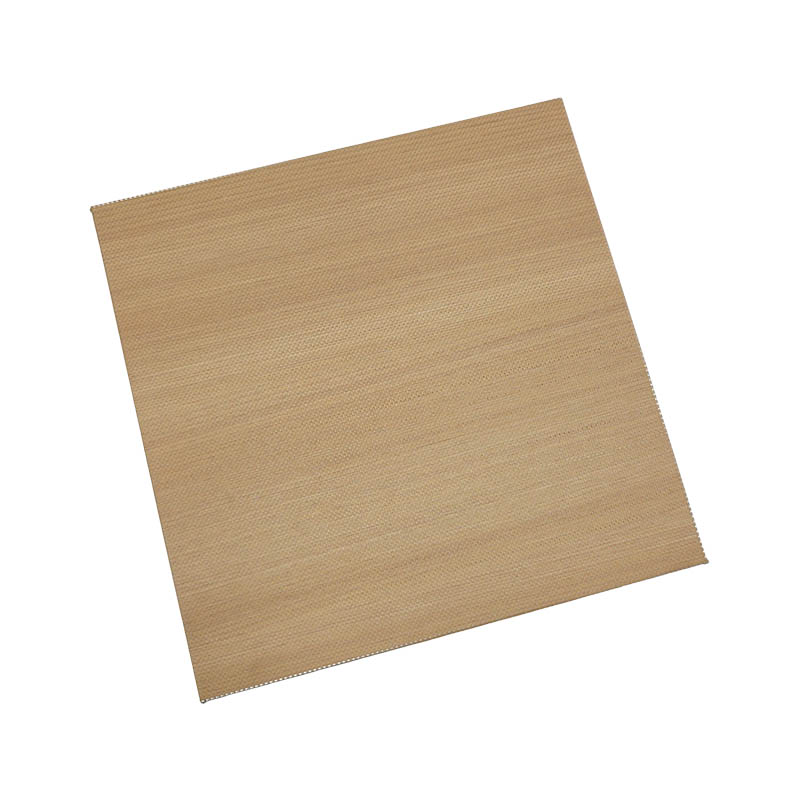
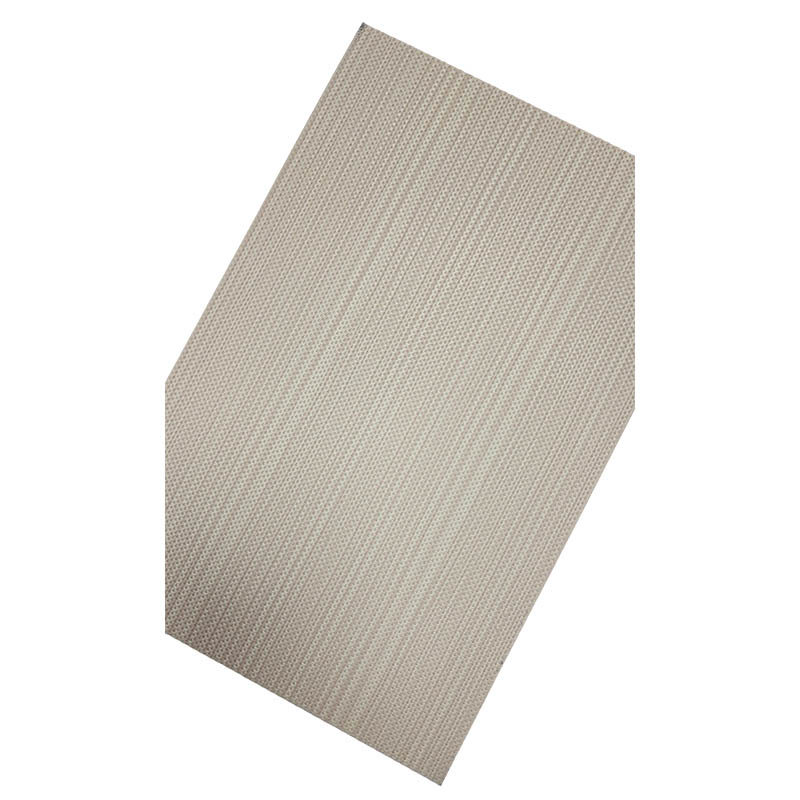
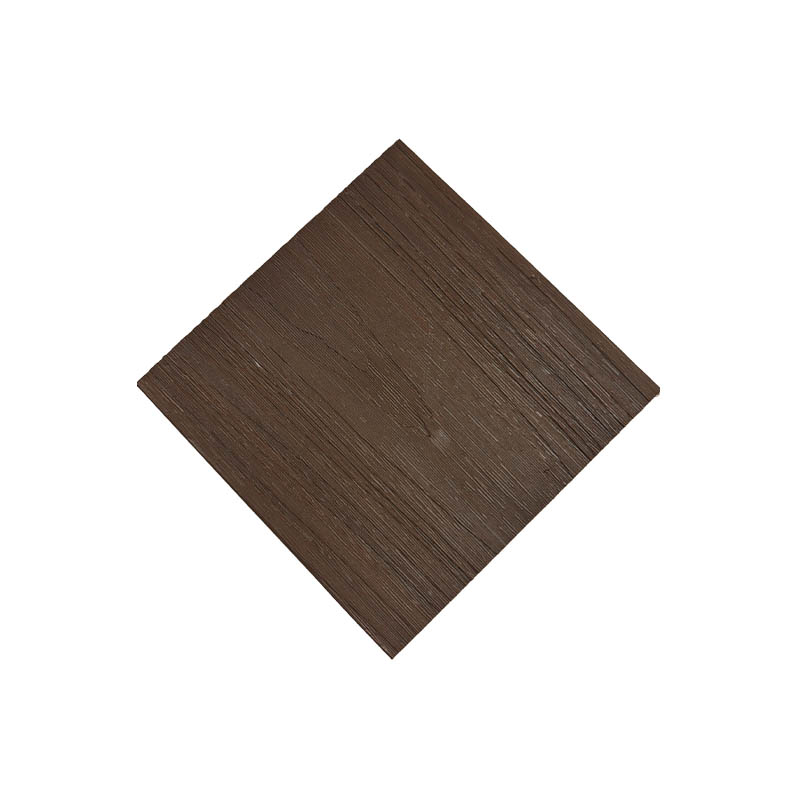
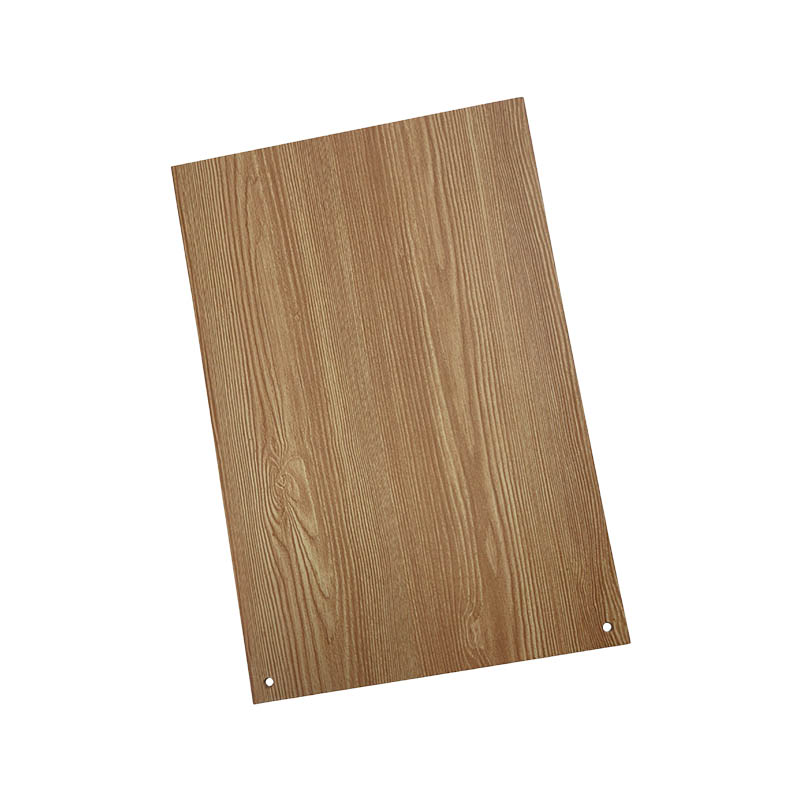


How can I ensure that the outdoor patio aluminum alloy wood grain flooring is tightly and securely installed?
Release Time : 2026-03-12
The tightness and stability of the joints in outdoor patio aluminum alloy wood grain flooring directly affect its service life, safety performance, and overall aesthetics. Due to prolonged exposure to complex environments such as sunlight, rain, and temperature fluctuations, the flooring material is prone to deformation due to thermal expansion and contraction, humidity changes, or external impacts, leading to loosening, cracking, or water leakage at the joints. Therefore, a comprehensive approach is needed, considering material properties, structural design, installation techniques, and post-installation maintenance, to construct a stable joint system adapted to the outdoor environment.
Material selection is fundamental to ensuring a stable joint. Aluminum alloy wood grain flooring must be made of high-strength, corrosion-resistant alloy materials, with tensile and yield strengths sufficient for long-term outdoor load-bearing requirements. Simultaneously, the flooring surface must be covered with an anti-oxidation coating to prevent metal oxidation caused by rainwater erosion or UV radiation, which could lead to rust and loosening at the joints. Furthermore, the wood grain transfer layer must be wear-resistant to prevent surface abrasion from frequent foot traffic or furniture movement, which could affect the seal at the joints. Material suppliers should provide complete material testing reports to ensure that all performance indicators meet outdoor use standards.
The structural design must balance thermal expansion and contraction with drainage requirements. Aluminum alloy has a high coefficient of thermal expansion; if the splicing structure lacks elastic buffer space, stress concentration during temperature changes can easily lead to cracking at the joints. Therefore, the flooring design should employ a composite splicing method of "clamp-on + elastic gasket": the clamp-on structure ensures the initial connection strength between the floorboards, while the elastic gasket absorbs displacement caused by thermal expansion and contraction through its own deformation, avoiding damage caused by rigid connections. Simultaneously, drainage channels or drainage holes should be designed on the bottom of the flooring to prevent rainwater from accumulating in the joints, which could lead to metal corrosion or peeling of the wood grain layer over time.
The installation process is crucial to the stability of the splicing. Before installation, the terrace substrate must be thoroughly cleaned to ensure the ground is flat, dry, and free of debris, avoiding uneven stress on the flooring due to unevenness. During splicing, a special tool, such as a rubber mallet, should be used to gently tap the edges of the floorboards to ensure the clamps are fully engaged, avoiding excessive force that could deform the flooring. For corners or irregularly shaped areas, the flooring should be cut in advance and expansion joints should be provided to prevent stress concentration caused by structural abrupt changes. In addition, installers must wear gloves to prevent hand sweat from corroding the floor surface and affecting the sealing of the joints.
Sealing the joints is crucial. Even if the floorboards are tightly joined, tiny gaps can still become entry points for rainwater, dust, or insects. Therefore, after joining, neutral silicone sealant must be used to fill the gaps. Its weather resistance, elasticity, and adhesion must meet outdoor usage requirements. When filling, the caulking gun should be moved slowly along the gap at a 45-degree angle to ensure the sealant is fully applied and the surface is smooth, avoiding air bubbles or delamination. After the sealant dries, its adhesion to the floor should be checked. If any detachment is found, it should be reapplied immediately to prevent the gap from widening.
The fixing method should be flexibly chosen based on the terrace structure. For concrete-based terraces, expansion bolts can be used to fix the flooring joists to the ground, and then the floorboards can be clipped onto the joists to form a double-stabilized structure. For wooden-based terraces, self-tapping screws should be used to connect the joists to the base, and a moisture-proof underlayment should be installed to prevent wood rot from causing the floorboards to loosen. Regardless of the fixing method used, it is essential to ensure uniform spacing between the joists to prevent floor unevenness caused by joist deformation. Furthermore, stainless steel fasteners must be used to prevent rust and corrosion.
Post-installation maintenance is crucial for extending the stability of the joints. Regularly inspect the floor joints for looseness, cracks, or water seepage, paying particular attention to vulnerable areas such as corners and drains. If aging and peeling of sealant are found, clean the old sealant and refill it promptly. If the floor is deformed due to external impact, contact a professional for adjustment or replacement. Additionally, before winter, check the drainage system for blockages to prevent snow from seeping into the joints and causing metal to freeze and crack.
The stability of outdoor patio aluminum alloy wood grain flooring joints needs to be verified through simulated environmental testing. This testing can simulate extreme conditions such as heavy rain, high-temperature exposure, and low-temperature freeze-thaw cycles to assess the joint strength, sealing, and drainage performance of the flooring after long-term use. Simultaneously, real users should be invited to participate in the experience testing, collecting feedback to optimize the installation process and ensure a balance between technical parameters and actual needs. Through comprehensive control over the entire process of materials, design, installation, and maintenance, aluminum alloy wood grain flooring can achieve a "seamless splicing, sturdy and durable" outdoor use effect.